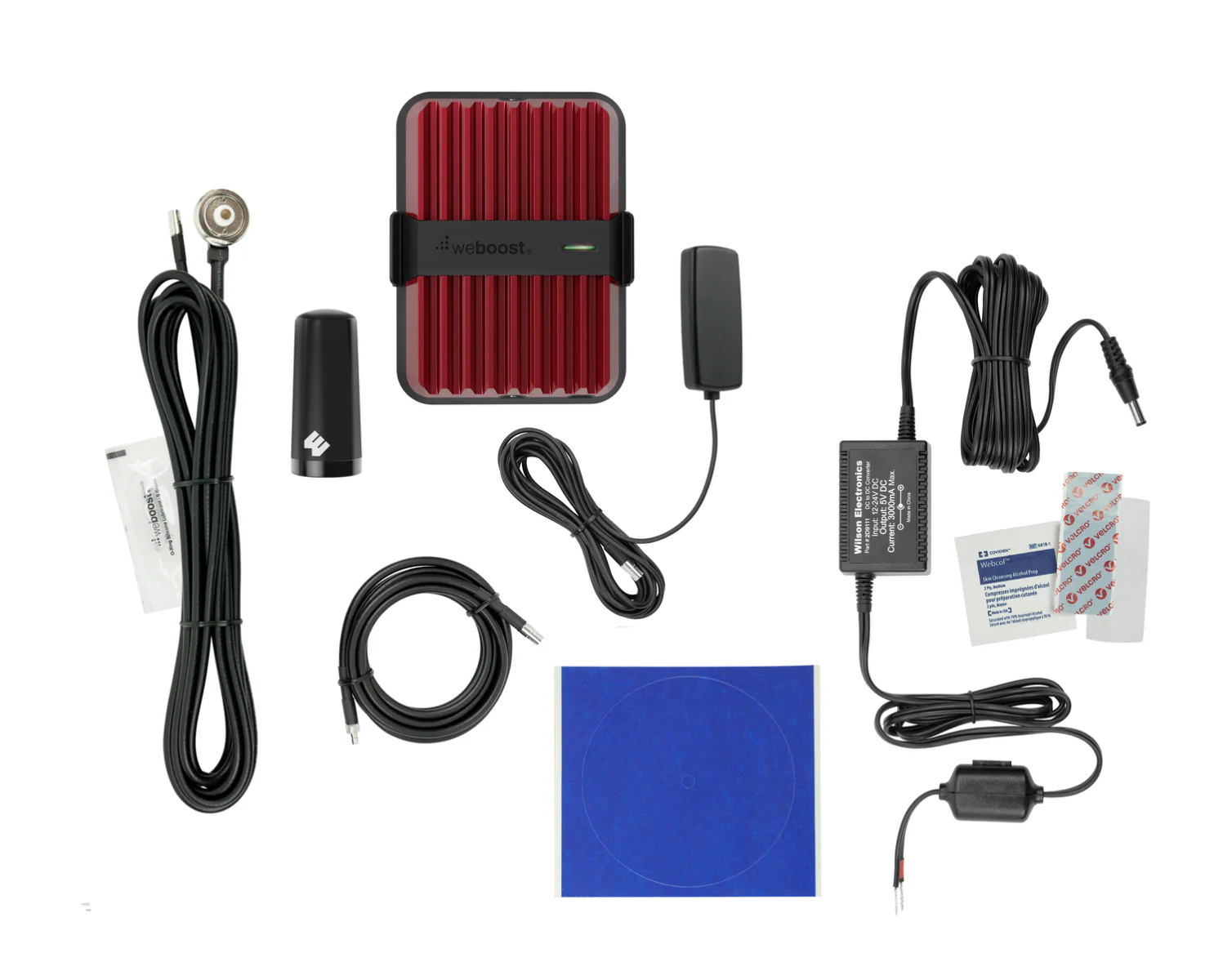
weBoost Office 200 (75 Ohm) Signal Booster | 471047
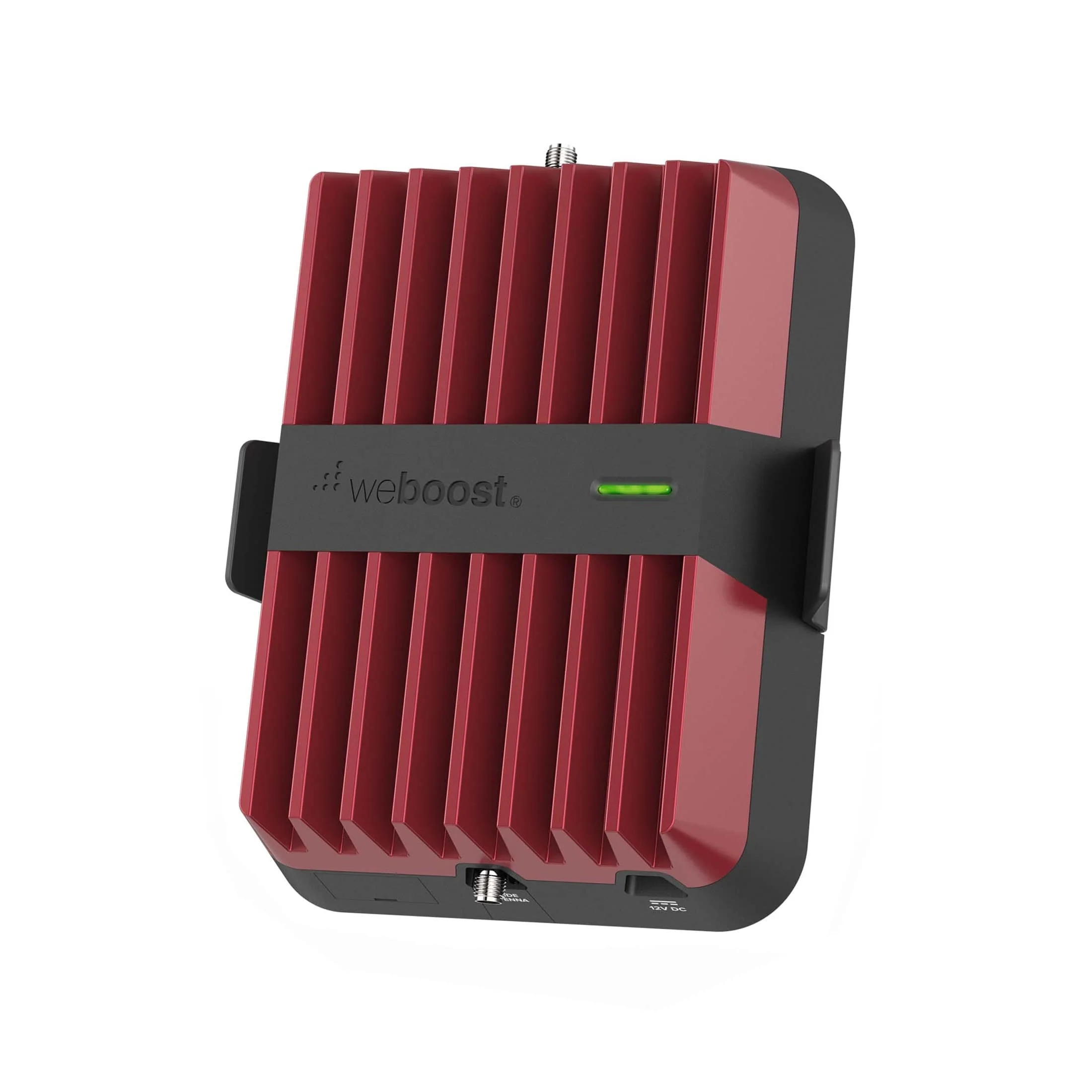
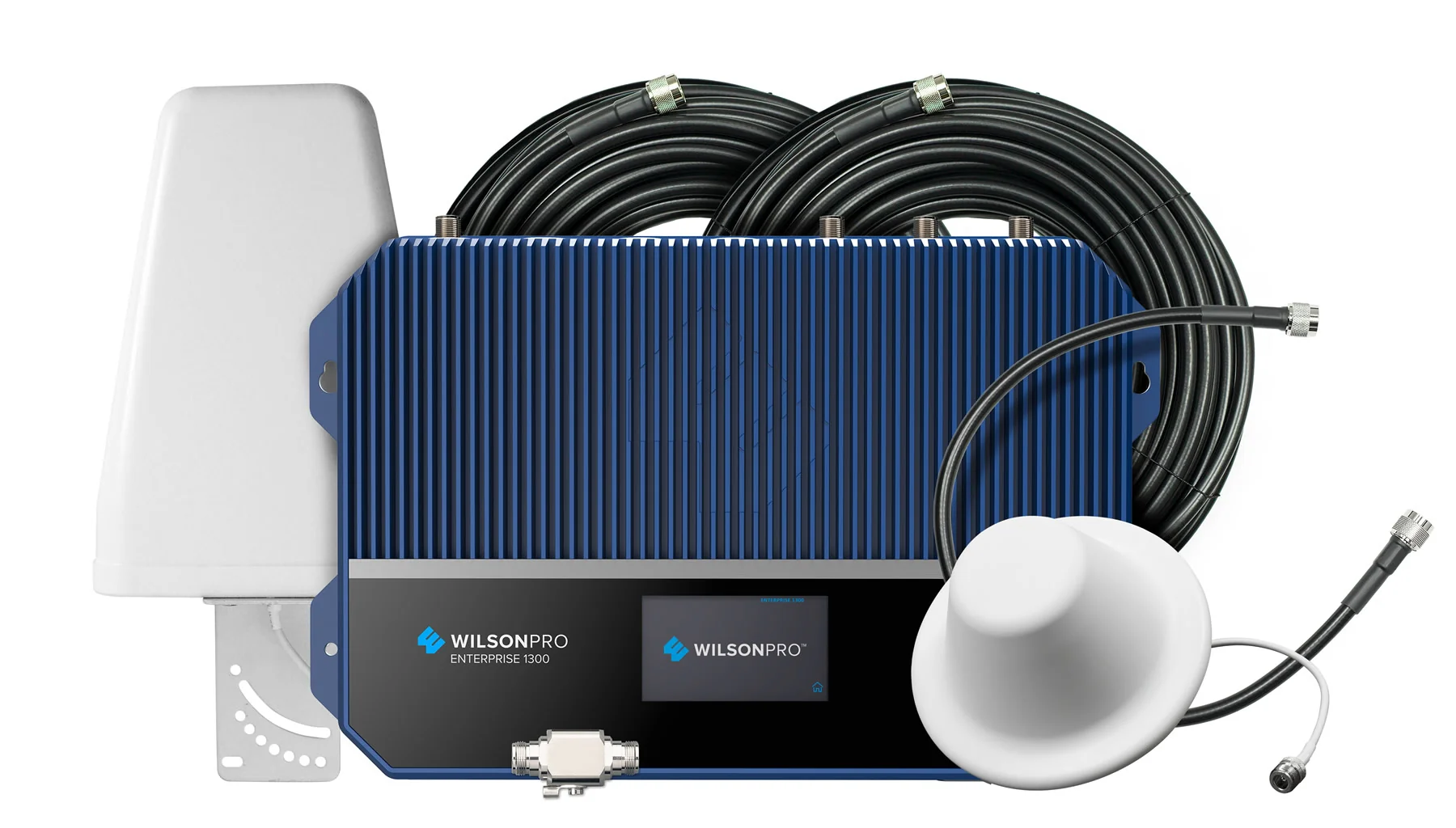
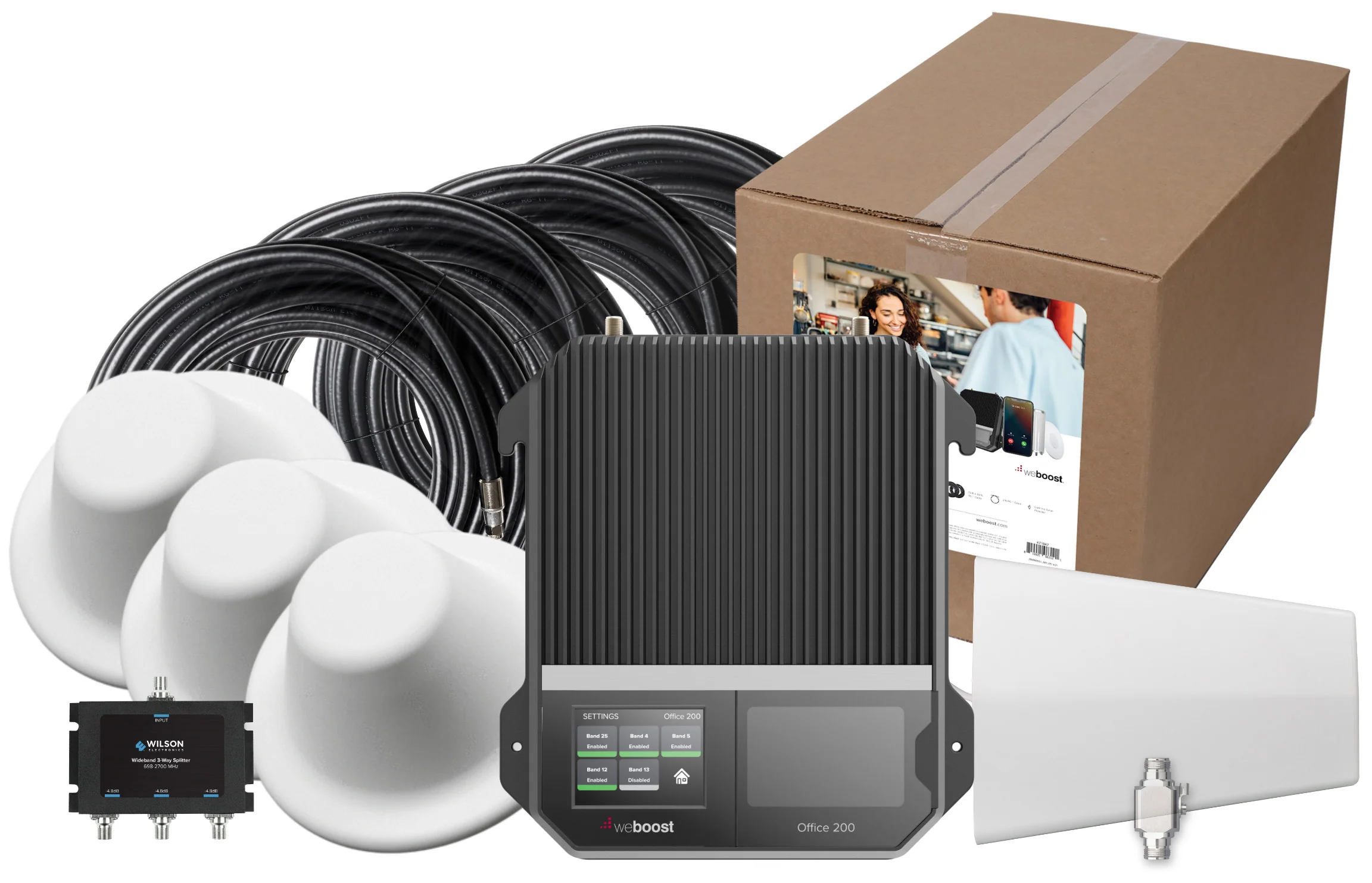
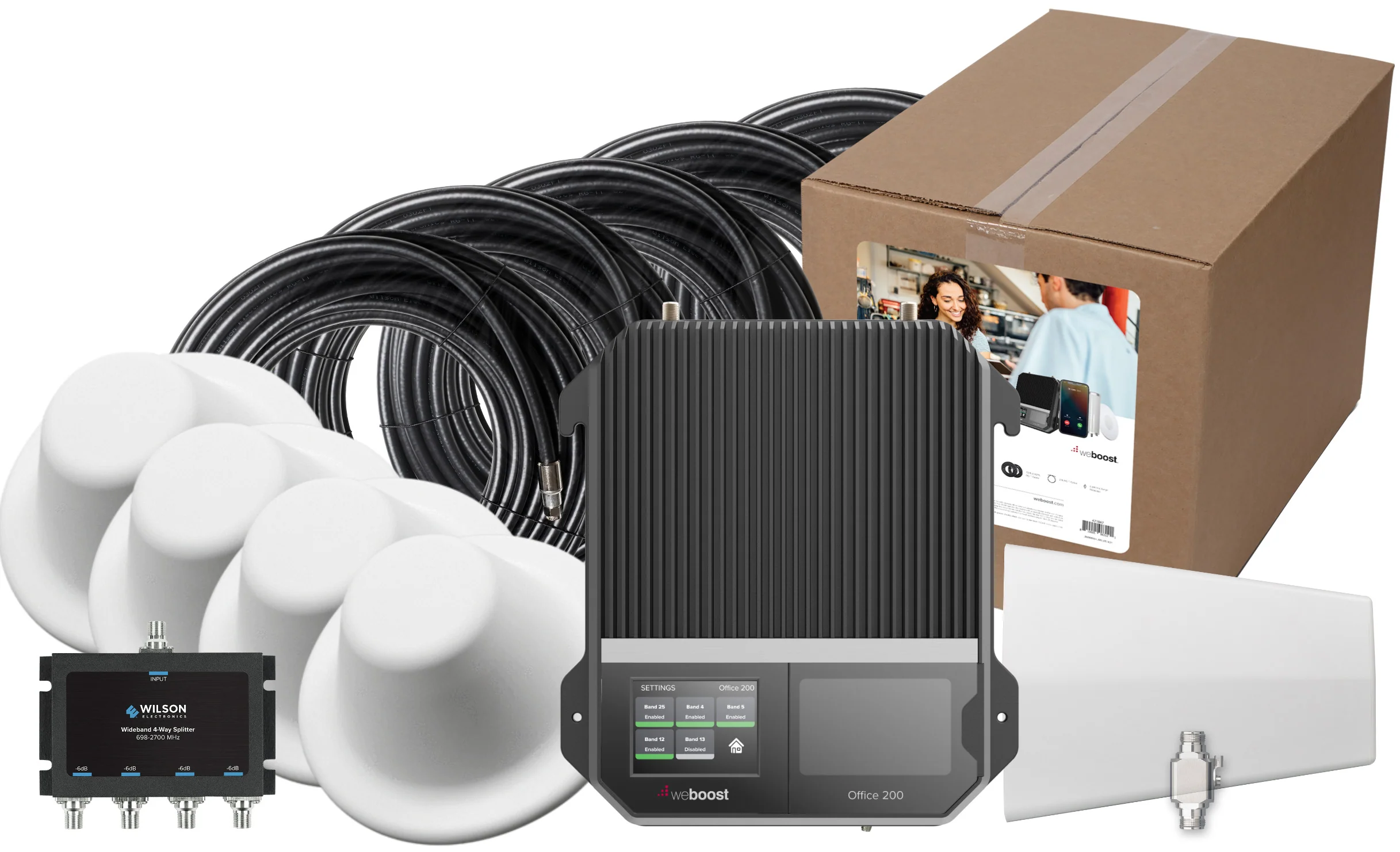
The weBoost 471047 Office 200 is our best professional signal booster and is the ideal choice when you need a powerful solution to provide boosted cell phone signal throughout your home or office.
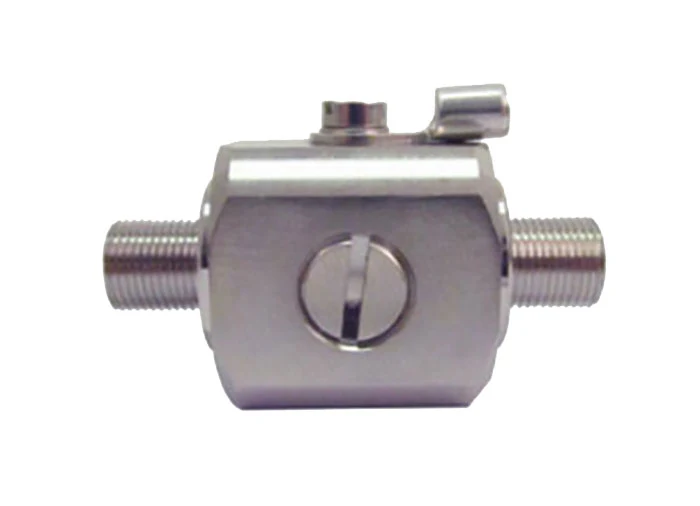
Don't let the name fool you, the Office 200 is a great solution for boosting signal in your home as well as your business. It's designed to be scalable, so it can handle very large or small spaces, depending on what your situation is. It also comes with an extra year of warranty, for a total of 3 years, and a lightning arrestor to protect your investment.
In order to give you the best possible solution to improve your cell signal, we've taken the standard Office 200 kit and added more antenna options for greater power and better coverage. Read below for more information on these antenna options and how to choose the right ones for you.
If you need a powerful signal booster to provide coverage throughout your entire home or business, then the weBoost 471047 Office 200 is the solution for you.
Please Note: This is a 75 Ohm system with F-connectors. Please see the weBoost Office 200 (50 Ohm) if you need a system with N-connectors.
Coverage Area
Many variables impact the total coverage area of a signal booster system. The following are estimates only and may not be accurate in any individual situation.
- If you have an existing strong 5-bar outside signal, you may get up to 20,000 sq ft of coverage inside (multiple inside antennas may be required)*
- If you have an existing 3 to 4-bar (-90 dB) outside signal, you may get up to 5,000 sq ft of coverage inside (multiple inside antennas may be required)*
- If you have an existing 1 to 2-bar (-100 dB) outside signal, you may get up to 2,000 sq ft of coverage inside*
* The actual coverage area of a signal booster is dependent on many factors including existing outside signal strength, obstructions between you and the cell tower, the materials used in your home or office, the layout of the area you need to cover with a boosted signal, and other factors. The approximate coverage areas listed above are estimates. Actual coverage area will vary based on these and other factors. If you're not sure if a system will be powerful enough for your needs, contact us to find out.
Supported Carriers
The weBoost Office 200 supports virtually all of the networks and carriers in the United States and Canada. For other locations, please consult the frequencies listed below to see if this product will work for you.
Here is a more detailed breakdown of the carriers, networks, and frequencies boosted by this kit:
- AT&T 2G, 3G, 4G HSPA+, 4G LTE & 5G
- Verizon 2G, 3G, 4G LTE & 5G
- Sprint 2G, 3G & 4G LTE
- T-Mobile 2G, 3G, 4G HSPA+ & 4G LTE
- US Cellular 2G, 3G & 4G LTE
- All other carriers using 700 MHz, 800 MHz, 1900 MHz, and AWS 1700/2100 MHz frequencies
Please Note: This signal booster kit will not work in most European, Asian, and African countries because the frequencies used there are different than those boosted by this equipment.
Outside Antenna Options
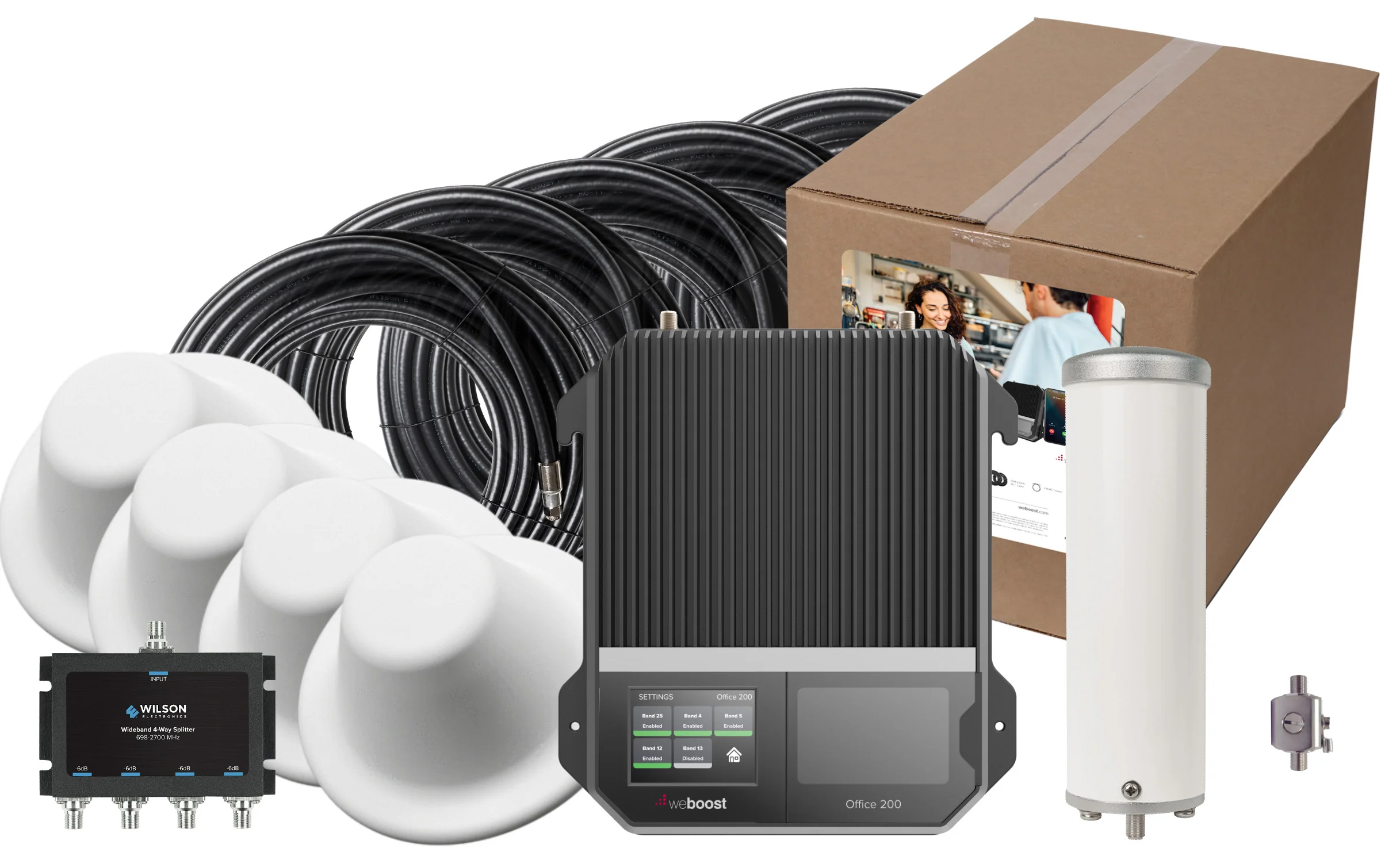
Different situations require different types of outside antennas. The weBoost Office 200 can be configured with one of three different outside antennas to accommodate pretty much any scenario. Read below to determine the best type of outside antenna for your situation.
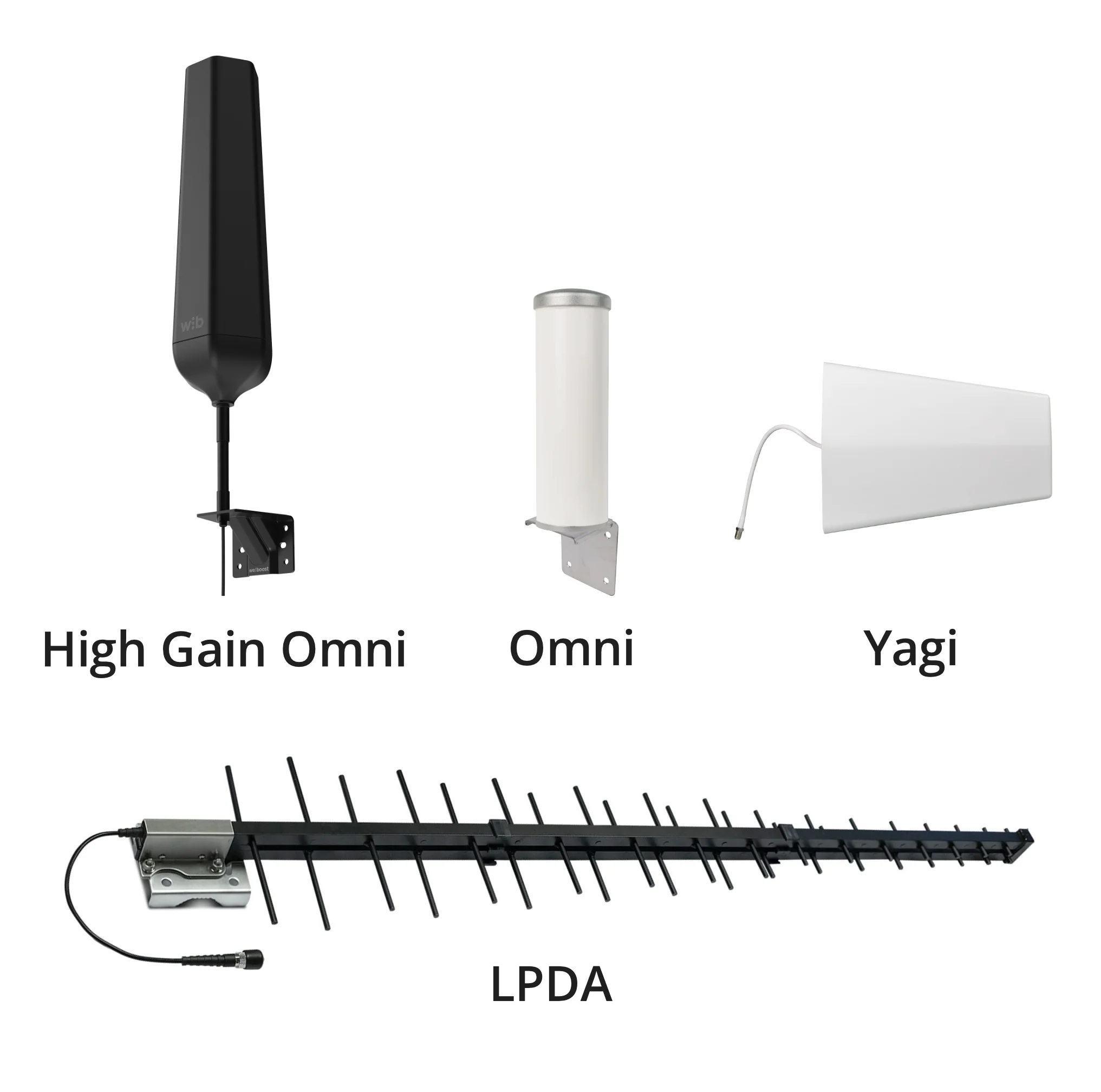
The Office 200 kit can be configured with one of the following three types of outside antenna:
Omni Antenna

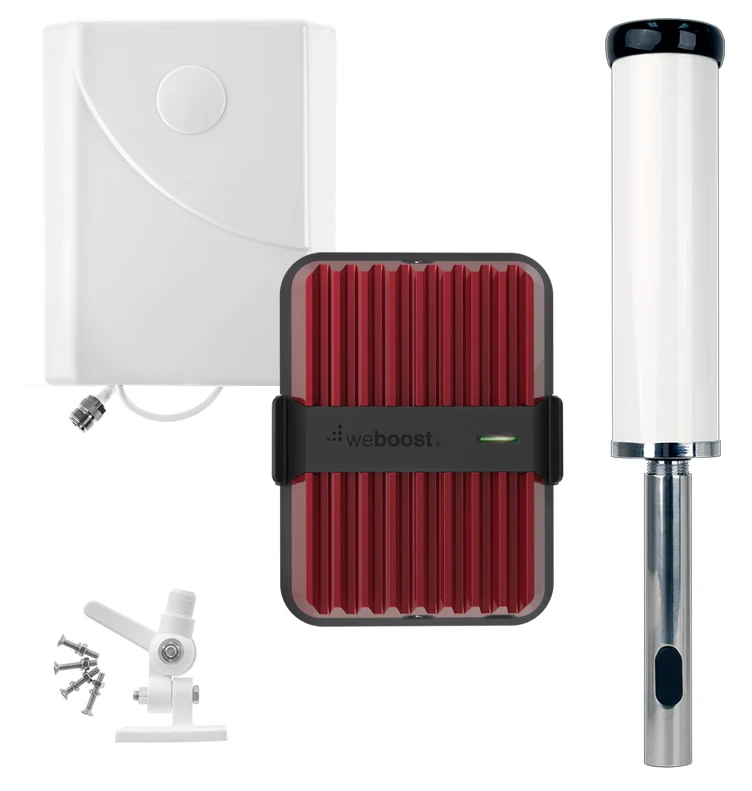
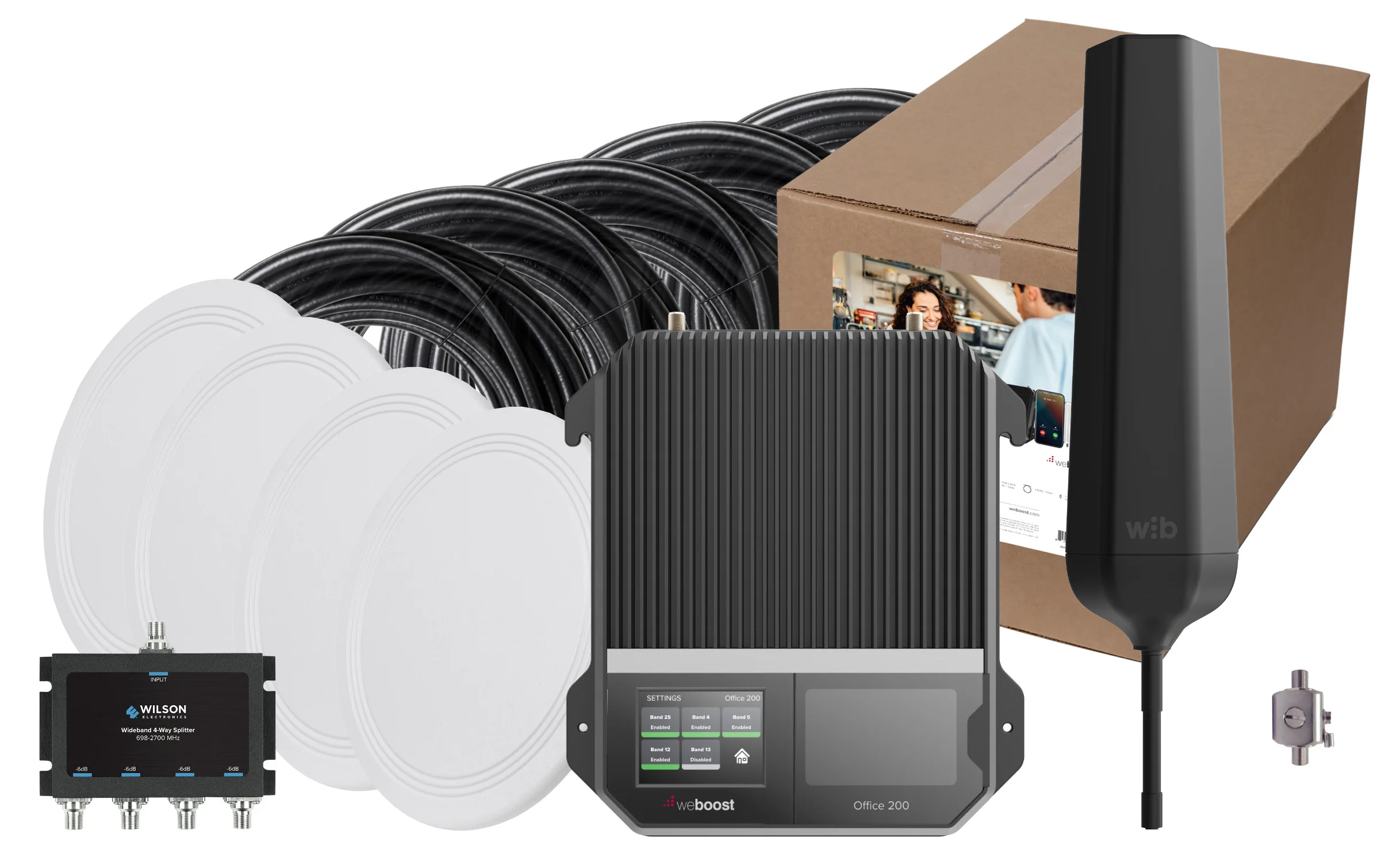
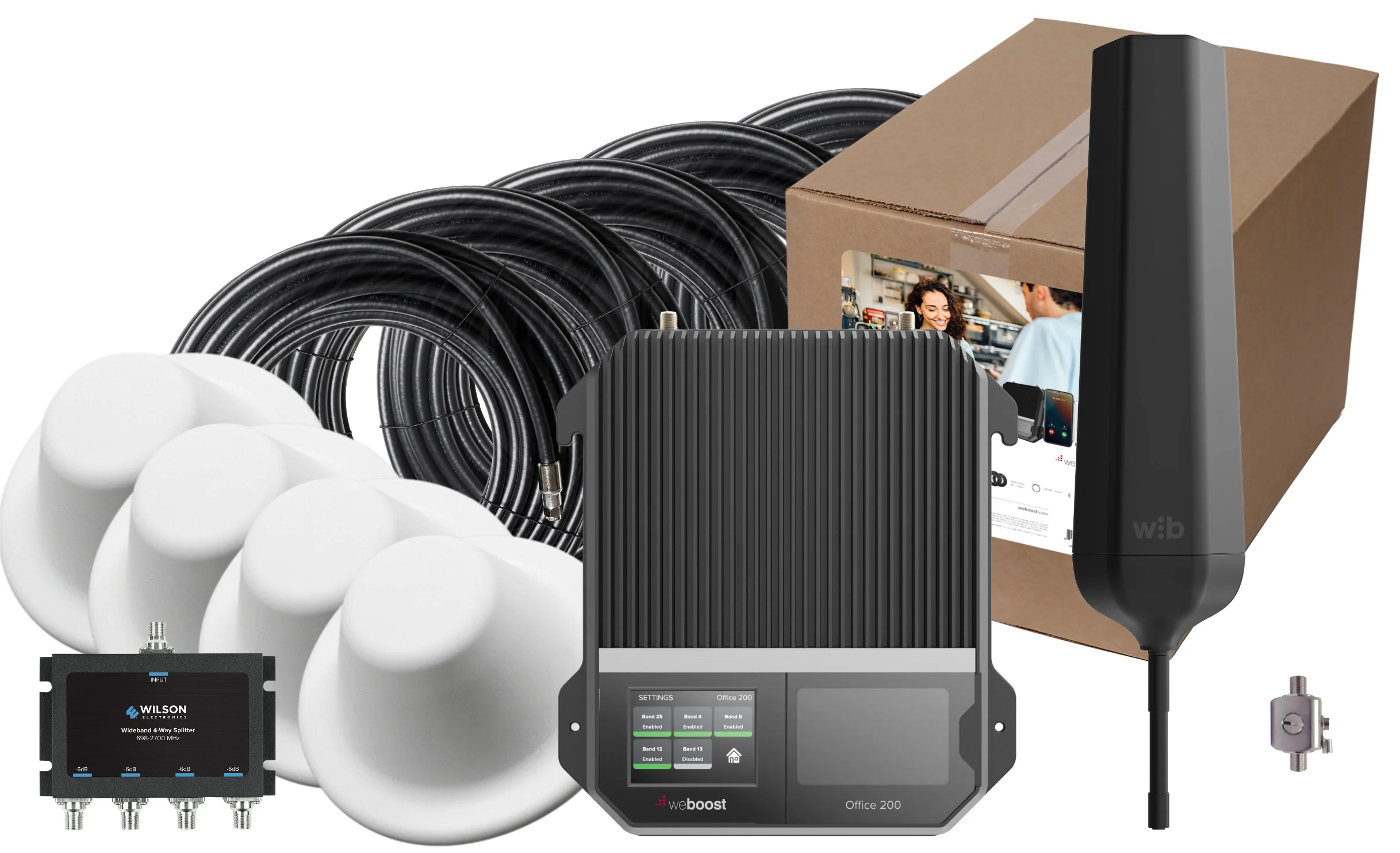
The omni antenna is the default option with the Office 200 and is good for hilly or mountainous areas. It is the weakest type of outside antenna, but can send and receive in all directions, so it does not require any aiming to function.
The Omni antenna has 4 dB of gain and will send and receive in all directions. Since it sends it all directions instead of just one, Omni antennas are not as powerful as directional antennas, so you'll generally get less inside coverage.
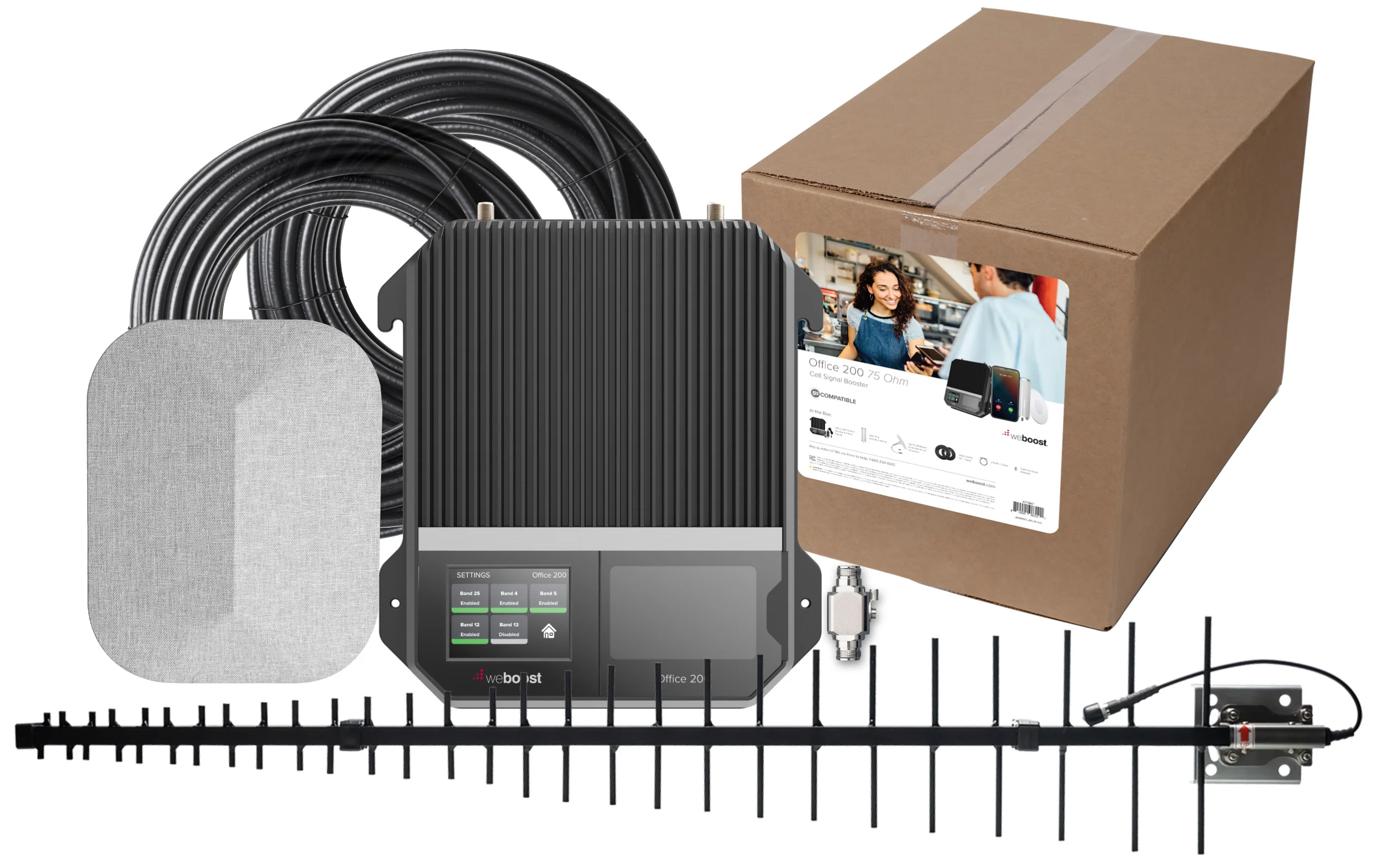
Yagi Directional Antenna

The Yagi directional antenna is the outdoor antenna option that can handle the majority of the situations that require a cell phone signal booster. It is directional, which means that it needs to be aimed towards the cell towers of the carrier(s) that you're trying to boost. Our guide on how to aim a directional antenna will walk you through the steps to do that.
The Yagi directional antenna has 10 dB of gain and can cover about 75 degrees of the horizon in one direction, so any carrier towers that fall within that area will be boosted. The Yagi antenna is not going to be a good option for scenarios where there are large hills, mountains, valleys or canyon walls that prevent line of sight to the cell tower. If this is your situation, then please see below for better options.
Since a directional antenna can only cover a portion of the horizon, you may only be able to cover the carrier(s) with towers in the direction that the yagi antenna is pointing. The advantage is that because they are aimed, they're much more powerful so you'll get more coverage area inside of the building with a directional antenna.
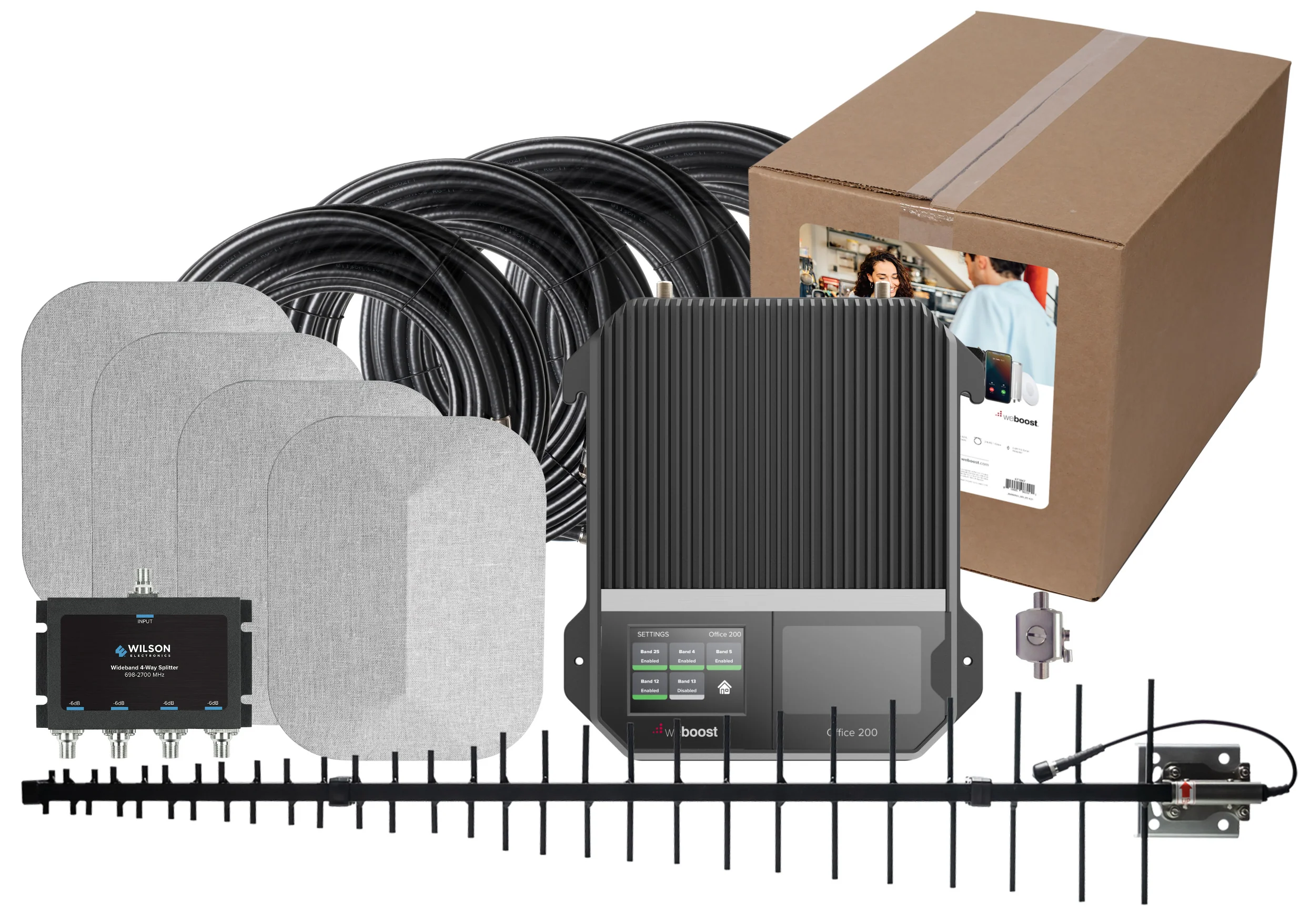
High Gain LPDA Antenna

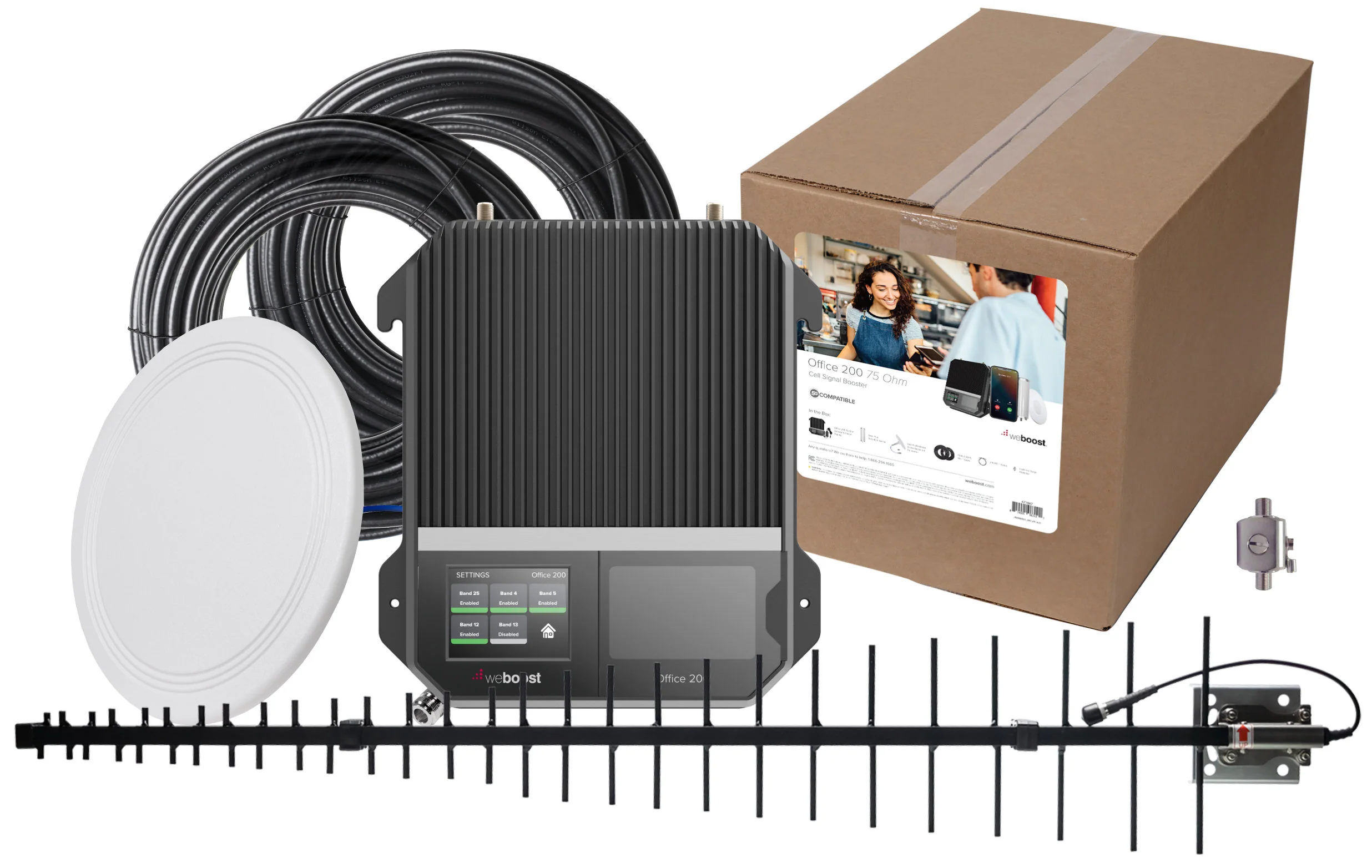
The Wilson High Gain Wide Band LPDA Antenna is one of the most powerful outside antennas that we offer. It's ideal for situations where you have a very weak existing outside signal and need the maximum antenna gain or for when you have a poor quality signal environment (low RSRQ and SINR) and need pinpoint accuracy to target the best nearby cell tower and improve those quality metrics.
The LPDA Antenna provides between 11 to 13 dBi of gain for all of the frequency bands currently used by the major cell carriers. It is about 3.5 feet (44 inches) long, so it requires a very sturdy mast as a mounting point.
Please Note: Due to its high directionality and narrow beam width, you must have a direct line of sight to the cell tower that you're targeting for the LPDA antenna to work properly. It will not work well in areas where you're getting signal bounce or do not have direct line of sight to the tower.
Inside Antenna Options
The right number of inside antennas depends on how large the space is and how many walls or other obstacles are in the space. In general, we recommend one antenna for every 750 to 1,500 sq ft in a normal home and every 1,500 to 2,500 sq ft in more open spaces like offices with cubicles.
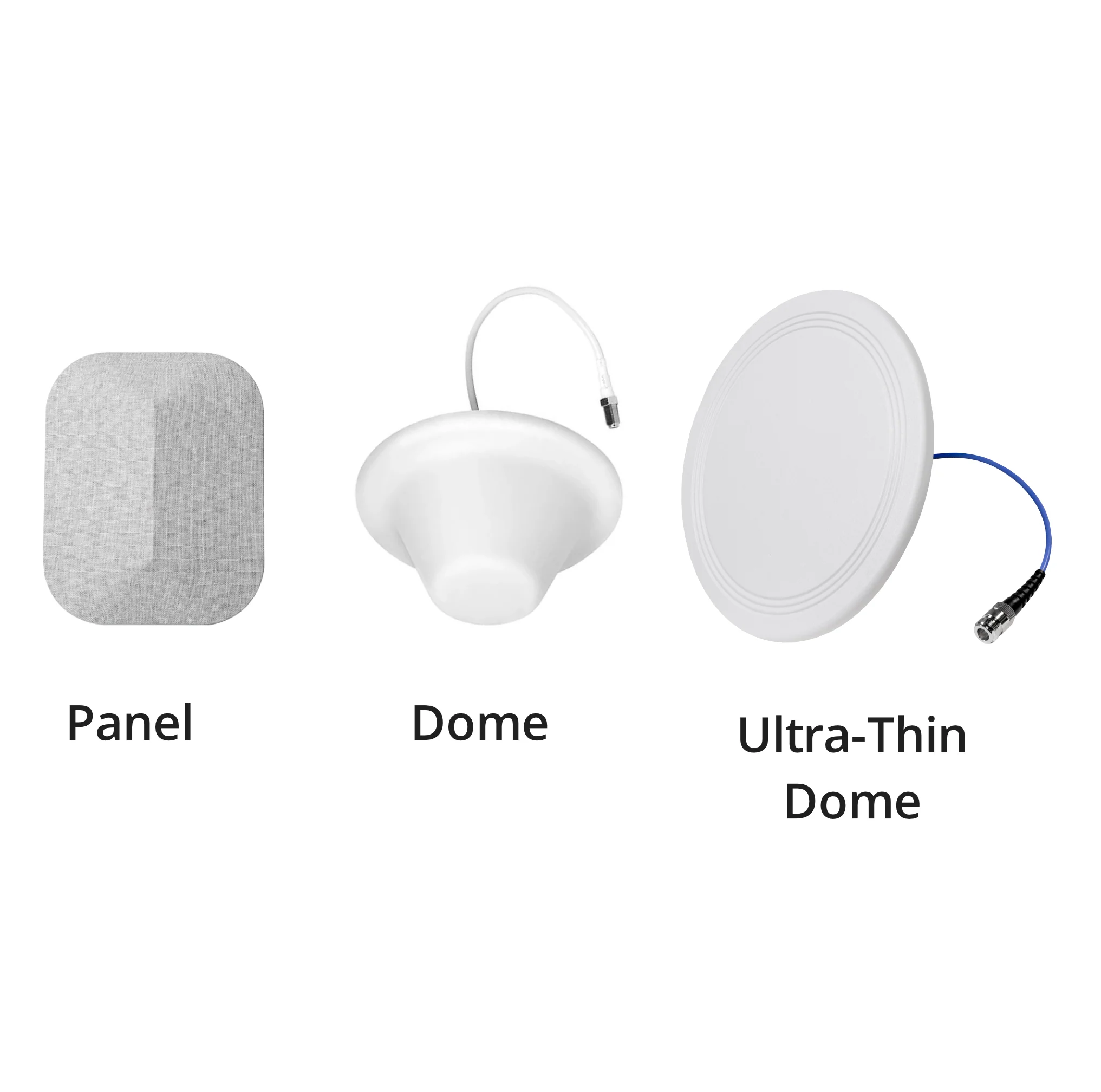
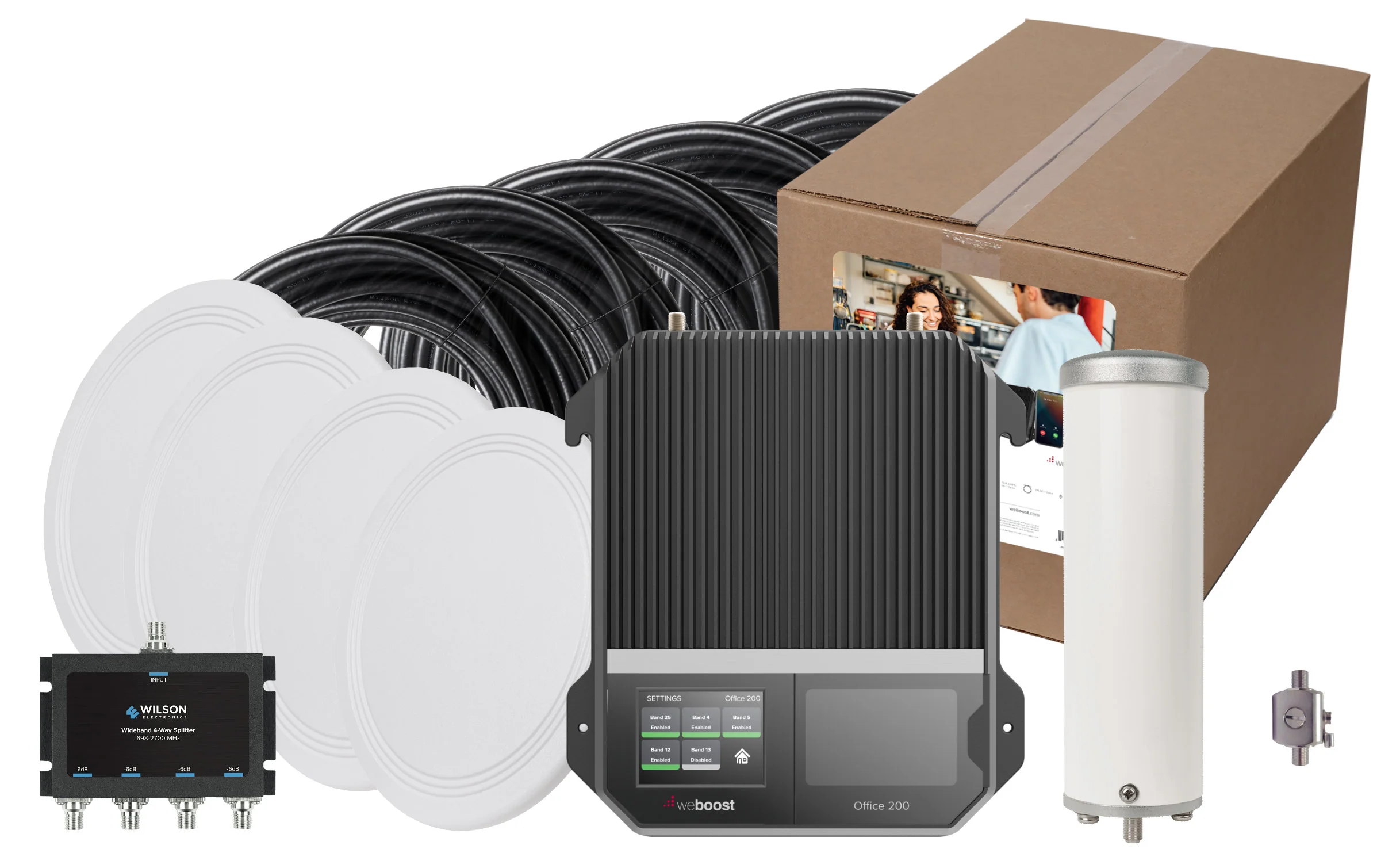
The Wilson Office 200 kit is available with three types of inside antennas:
Standard Dome Antenna

A standard dome antenna mounts to the ceiling and covers in all directions around the antenna. A dome antenna must be installed horizontally, it cannot be mounted vertically to a wall. When using a dome antenna, you must be able to run cables on the backside of the ceiling, so it works best below an attic or in commercial spaces with ceiling tiles.
Standard domes work well in single-story homes and offices where you have access to the backside of the ceiling to run cables and make connections.
The standard dome has an average gain of 2 dBi on the low frequencies and 5 dBi on the high frequencies.
Ultra Thin Dome Antenna

The ultra-thin dome antenna is a very low-profile version of the standard dome antenna. The ultra-thin dome mounts to the ceiling and covers in all directions around the antenna. A dome antenna must be installed horizontally and cannot be mounted vertically to a wall. When using a dome antenna, you must be able to run cables on the backside of the ceiling, so it works best below an attic or in commercial spaces with ceiling tiles.
Ultra-thin domes work well in situations where aesthetics are important but they also are more powerful to give you a larger coverage area. They are significantly less noticeable than the standard dome once installed.
The ultra-thin dome has an average gain of 4 dBi on the low frequencies and 6 dBi on the high frequencies.
Panel Antenna

Panel antennas are a type of directional indoor antenna. They can be mounted to a wall or to a ceiling. The signal comes out the front of the antenna so it must be mounted in a place where it is aimed at the area where you need coverage. A short pigtail cable comes out of the bottom of the antenna, so you do not need access to behind a wall or ceiling to install a panel antenna.
In multi-story homes, panel antennas can be located in the attic pointing down to cover the floors below without any part of the system being visible.
The panel antenna has an average gain of 7 dBi on the low frequencies and 10 dBi on the high frequencies. This makes it more powerful than the dome antennas, but that is because it is a directional antenna, so it sends all of its signal in one direction instead of all directions.
Need Help?
Deciding on the right antenna style and number can be difficult. If you’re not sure what’s best for your situation, give us a call and one of our signal booster experts would be happy to recommend a solution for you.
Original: $1,699.99
-65%$1,699.99
$595.00



















Description
The weBoost 471047 Office 200 is our best professional signal booster and is the ideal choice when you need a powerful solution to provide boosted cell phone signal throughout your home or office.
Don't let the name fool you, the Office 200 is a great solution for boosting signal in your home as well as your business. It's designed to be scalable, so it can handle very large or small spaces, depending on what your situation is. It also comes with an extra year of warranty, for a total of 3 years, and a lightning arrestor to protect your investment.
In order to give you the best possible solution to improve your cell signal, we've taken the standard Office 200 kit and added more antenna options for greater power and better coverage. Read below for more information on these antenna options and how to choose the right ones for you.
If you need a powerful signal booster to provide coverage throughout your entire home or business, then the weBoost 471047 Office 200 is the solution for you.
Please Note: This is a 75 Ohm system with F-connectors. Please see the weBoost Office 200 (50 Ohm) if you need a system with N-connectors.
Coverage Area
Many variables impact the total coverage area of a signal booster system. The following are estimates only and may not be accurate in any individual situation.
- If you have an existing strong 5-bar outside signal, you may get up to 20,000 sq ft of coverage inside (multiple inside antennas may be required)*
- If you have an existing 3 to 4-bar (-90 dB) outside signal, you may get up to 5,000 sq ft of coverage inside (multiple inside antennas may be required)*
- If you have an existing 1 to 2-bar (-100 dB) outside signal, you may get up to 2,000 sq ft of coverage inside*
* The actual coverage area of a signal booster is dependent on many factors including existing outside signal strength, obstructions between you and the cell tower, the materials used in your home or office, the layout of the area you need to cover with a boosted signal, and other factors. The approximate coverage areas listed above are estimates. Actual coverage area will vary based on these and other factors. If you're not sure if a system will be powerful enough for your needs, contact us to find out.
Supported Carriers
The weBoost Office 200 supports virtually all of the networks and carriers in the United States and Canada. For other locations, please consult the frequencies listed below to see if this product will work for you.
Here is a more detailed breakdown of the carriers, networks, and frequencies boosted by this kit:
- AT&T 2G, 3G, 4G HSPA+, 4G LTE & 5G
- Verizon 2G, 3G, 4G LTE & 5G
- Sprint 2G, 3G & 4G LTE
- T-Mobile 2G, 3G, 4G HSPA+ & 4G LTE
- US Cellular 2G, 3G & 4G LTE
- All other carriers using 700 MHz, 800 MHz, 1900 MHz, and AWS 1700/2100 MHz frequencies
Please Note: This signal booster kit will not work in most European, Asian, and African countries because the frequencies used there are different than those boosted by this equipment.
Outside Antenna Options
Different situations require different types of outside antennas. The weBoost Office 200 can be configured with one of three different outside antennas to accommodate pretty much any scenario. Read below to determine the best type of outside antenna for your situation.
The Office 200 kit can be configured with one of the following three types of outside antenna:
Omni Antenna
The omni antenna is the default option with the Office 200 and is good for hilly or mountainous areas. It is the weakest type of outside antenna, but can send and receive in all directions, so it does not require any aiming to function.
The Omni antenna has 4 dB of gain and will send and receive in all directions. Since it sends it all directions instead of just one, Omni antennas are not as powerful as directional antennas, so you'll generally get less inside coverage.
Yagi Directional Antenna
The Yagi directional antenna is the outdoor antenna option that can handle the majority of the situations that require a cell phone signal booster. It is directional, which means that it needs to be aimed towards the cell towers of the carrier(s) that you're trying to boost. Our guide on how to aim a directional antenna will walk you through the steps to do that.
The Yagi directional antenna has 10 dB of gain and can cover about 75 degrees of the horizon in one direction, so any carrier towers that fall within that area will be boosted. The Yagi antenna is not going to be a good option for scenarios where there are large hills, mountains, valleys or canyon walls that prevent line of sight to the cell tower. If this is your situation, then please see below for better options.
Since a directional antenna can only cover a portion of the horizon, you may only be able to cover the carrier(s) with towers in the direction that the yagi antenna is pointing. The advantage is that because they are aimed, they're much more powerful so you'll get more coverage area inside of the building with a directional antenna.
High Gain LPDA Antenna
The Wilson High Gain Wide Band LPDA Antenna is one of the most powerful outside antennas that we offer. It's ideal for situations where you have a very weak existing outside signal and need the maximum antenna gain or for when you have a poor quality signal environment (low RSRQ and SINR) and need pinpoint accuracy to target the best nearby cell tower and improve those quality metrics.
The LPDA Antenna provides between 11 to 13 dBi of gain for all of the frequency bands currently used by the major cell carriers. It is about 3.5 feet (44 inches) long, so it requires a very sturdy mast as a mounting point.
Please Note: Due to its high directionality and narrow beam width, you must have a direct line of sight to the cell tower that you're targeting for the LPDA antenna to work properly. It will not work well in areas where you're getting signal bounce or do not have direct line of sight to the tower.
Inside Antenna Options
The right number of inside antennas depends on how large the space is and how many walls or other obstacles are in the space. In general, we recommend one antenna for every 750 to 1,500 sq ft in a normal home and every 1,500 to 2,500 sq ft in more open spaces like offices with cubicles.
The Wilson Office 200 kit is available with three types of inside antennas:
Standard Dome Antenna
A standard dome antenna mounts to the ceiling and covers in all directions around the antenna. A dome antenna must be installed horizontally, it cannot be mounted vertically to a wall. When using a dome antenna, you must be able to run cables on the backside of the ceiling, so it works best below an attic or in commercial spaces with ceiling tiles.
Standard domes work well in single-story homes and offices where you have access to the backside of the ceiling to run cables and make connections.
The standard dome has an average gain of 2 dBi on the low frequencies and 5 dBi on the high frequencies.
Ultra Thin Dome Antenna
The ultra-thin dome antenna is a very low-profile version of the standard dome antenna. The ultra-thin dome mounts to the ceiling and covers in all directions around the antenna. A dome antenna must be installed horizontally and cannot be mounted vertically to a wall. When using a dome antenna, you must be able to run cables on the backside of the ceiling, so it works best below an attic or in commercial spaces with ceiling tiles.
Ultra-thin domes work well in situations where aesthetics are important but they also are more powerful to give you a larger coverage area. They are significantly less noticeable than the standard dome once installed.
The ultra-thin dome has an average gain of 4 dBi on the low frequencies and 6 dBi on the high frequencies.
Panel Antenna
Panel antennas are a type of directional indoor antenna. They can be mounted to a wall or to a ceiling. The signal comes out the front of the antenna so it must be mounted in a place where it is aimed at the area where you need coverage. A short pigtail cable comes out of the bottom of the antenna, so you do not need access to behind a wall or ceiling to install a panel antenna.
In multi-story homes, panel antennas can be located in the attic pointing down to cover the floors below without any part of the system being visible.
The panel antenna has an average gain of 7 dBi on the low frequencies and 10 dBi on the high frequencies. This makes it more powerful than the dome antennas, but that is because it is a directional antenna, so it sends all of its signal in one direction instead of all directions.
Need Help?
Deciding on the right antenna style and number can be difficult. If you’re not sure what’s best for your situation, give us a call and one of our signal booster experts would be happy to recommend a solution for you.